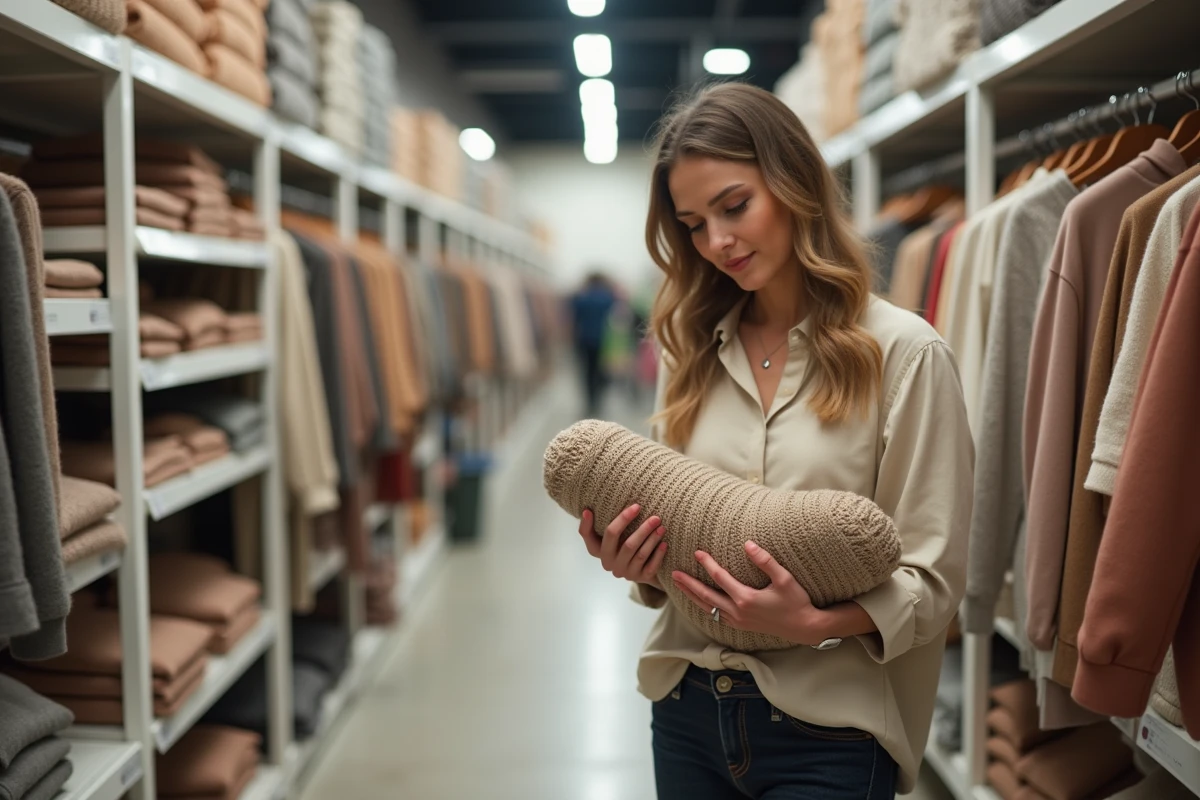
Buying a t-shirt or pants while grocery shopping used to seem like a last-minute solution not too long ago. The clothing sections in supermarkets did not have the reputation for offering durable pieces. This perception is changing, and the women’s clothing sold at Intermarché is a good example of this.
Textiles in supermarkets: what’s changed in the women’s aisles
Have you noticed that the clothing sections in supermarkets no longer look like they did a few years ago? The offering has become more structured. At Intermarché, the partnership with Gémo has marked a turning point. The chain has integrated a selection of ready-to-wear, shoes, and accessories from a specialized brand into several stores.
This collaboration is not insignificant. It means that supermarket textiles now follow a brand logic, with collections designed in advance, tailored cuts, and trend monitoring. We are moving away from just a simple lot of basics placed on a table at the end of the aisle.
Several shoppers interested in the quality of Intermarché women’s clothing find that the finishes hold up well after several washes, a criterion that mid-range customers consider a priority.
Quality-price ratio of Intermarché clothing: why it convinces
Price remains the primary purchasing filter for the majority of French consumers. Buying a piece of clothing at a low price is not a problem in itself. The issue arises when the item distorts, pills, or fades after just the third wash.
This is where Intermarché women’s clothing gains credibility. A low price no longer automatically equates to disposable quality. Several concrete elements can assure this before purchasing:
- The fabric weight: a jersey or sufficiently dense cotton retains its shape longer than a thin, transparent fabric
- Double stitching in high-stress areas (armholes, crotch): this indicates a construction designed to last
- The composition label: a high percentage of natural fibers (cotton, linen) limits pilling compared to a 100% synthetic fabric
- The color retention after washing: feedback from regular shoppers indicates that the shades remain stable over several cycles
These criteria are not reserved for high-end brands. They can be checked in a matter of seconds in the aisle, and that’s exactly what returning shoppers do.
Sustainable fashion and tight budgets: Intermarché at the right time
ADEME reminds us that France consumes massive amounts of clothing each year, with an environmental impact comparable to that of heavy industrial sectors. Textiles account for between 4 and 8% of global greenhouse gas emissions. In this context, buying less but better is becoming a reflex for a growing number of consumers.
Fast fashion brands offer rock-bottom prices, but with a lifespan often limited to just a few weeks of use. The economic calculation ultimately works against these repeated purchases. An item worn thirty times costs less per wear than an item discarded after five uses.
Intermarché positions itself in this middle ground. The price remains accessible, and the durability of the pieces allows them to be kept for several seasons. For shoppers looking to reduce their textile footprint without switching to high-priced ethical brands, it’s a credible compromise.

A practical purchase integrated into grocery shopping
The other advantage, rarely mentioned, is practicality. Spotting a piece of clothing while grocery shopping eliminates an extra trip. No dedicated travel to the city center or shopping area. The time saved is as powerful a purchasing factor as the price.
For active shoppers or mothers, this proximity changes the game. They don’t need to plan a shopping session. The clothing comes to them, in a place they already visit every week.
Style and Intermarché women’s clothing: beyond the basics
The most persistent misconception concerns style. A supermarket wouldn’t be a place to find a dress or blouse that one enjoys wearing. Recent collections show that this idea deserves to be revised.
The cuts follow seasonal trends: straight cuts, floral prints in spring, autumn colors in September. The Intermarché textile offering covers everyday pieces and more dressed-up outfits. A flowy pant paired with a structured top can create a perfectly acceptable office outfit.
Social media amplify this change in perception. Shoppers share their finds on TikTok and Instagram, showcasing complete looks assembled from Intermarché pieces. This digital word-of-mouth reaches consumers who would never have thought to check the clothing aisle of their supermarket.
What shoppers check before buying
The quality reflex is developing. Rather than relying solely on the displayed price, consumers look at:
- The exact composition on the label, favoring blends with at least 50% natural fibers
- The consistency of the seams and the absence of loose threads
- The drape of the garment on themselves, not just on the hanger
These simple actions help identify good pieces and eliminate those that won’t hold up. With a little practice, sorting can be done in a few seconds.
The growing appeal of Intermarché women’s textiles is based on an alignment between price, durability, and practicality. Shoppers do not compromise on quality; they simply find this quality where they hadn’t looked before. The clothing aisle of the supermarket is no longer a backup plan; it has become a legitimate option.