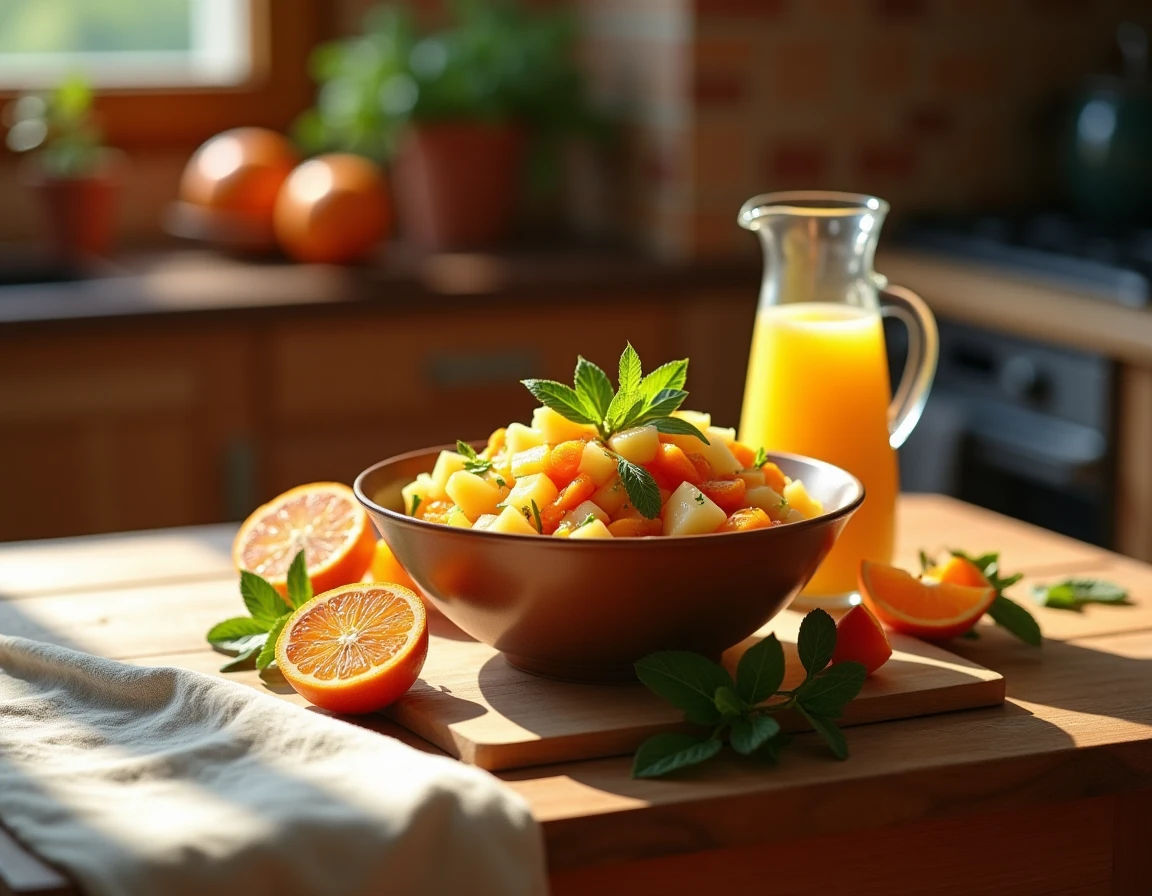
The choice of juice poured over a homemade fruit salad radically changes the final result. Acidity, sweetness, dominant aroma: each liquid affects the taste balance of the dessert and the longevity of the fruits over time. Comparing the most common juices on these three axes allows you to choose the one that fits your recipe rather than following a default reflex.
Acidity, sugar, and aroma: the juice comparison for fruit salad
Not all juices serve the same purpose. Some mainly provide sugar, while others offer acidity that slows down the oxidation of cut fruits. The table below summarizes the characteristics of the most commonly used options in cooking.
| Juice | Acidity | Sweetness | Dominant Aroma | Anti-oxidation |
|---|---|---|---|---|
| Fresh lemon juice | High | Low | Bright citrus | Yes (strong) |
| Fresh orange juice | Medium | Medium | Round citrus | Yes (moderate) |
| Fresh pineapple | Medium | Medium-high | Sweet tropical | Yes (moderate) |
| Passion fruit | High | Low | Intense exotic | Low |
| Cloudy apple juice | Low | High | Sweet, neutral | Low |
| White grape juice | Low | High | Sweet, subtle | Low |
Lemon juice excels in its anti-oxidation function: just a few drops are enough to prevent apples and pears from browning. However, its acidity masks the delicate flavors of red fruits if the amount exceeds one tablespoon for a bowl serving four portions.
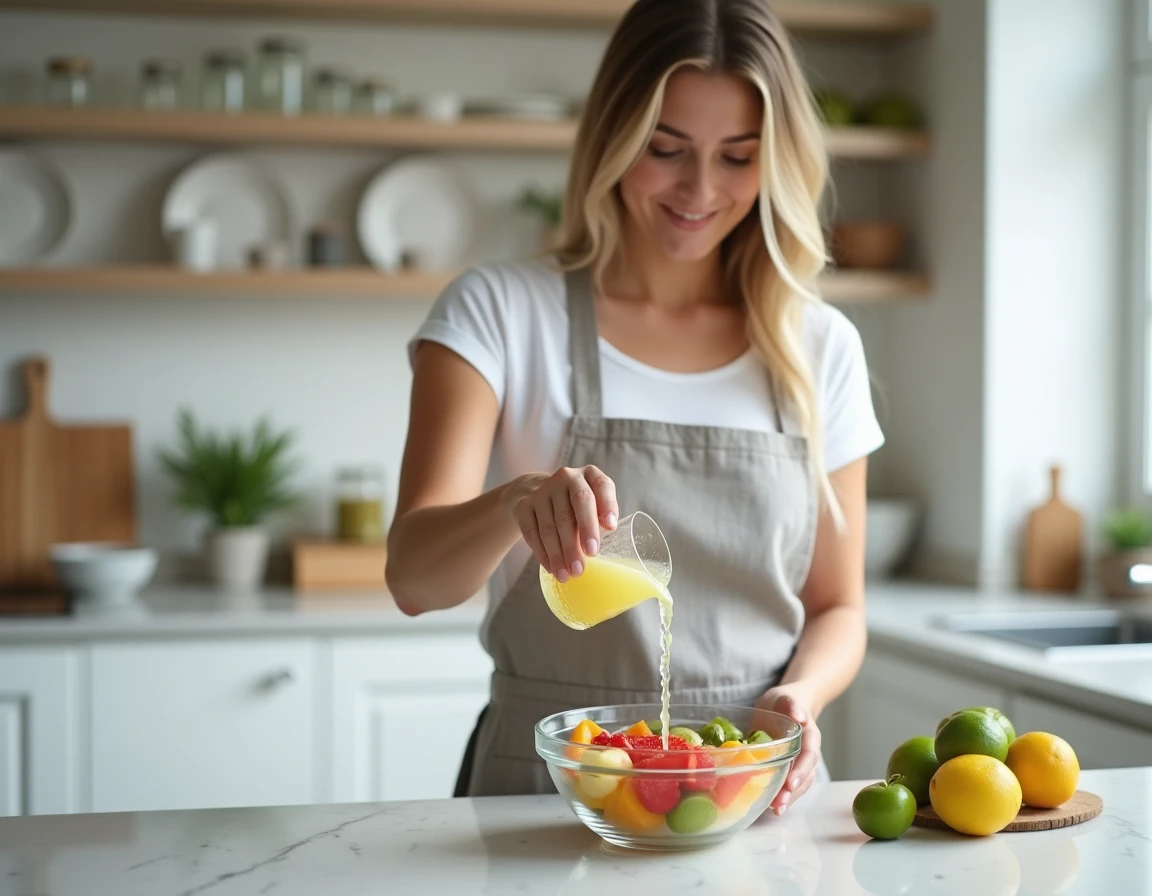
Fresh orange juice offers a better balance between acidity and sugar. It serves as a liquid base without overpowering the aromas of other fruits. Knowing which juice to use in a fruit salad therefore depends primarily on the desired taste profile, not a one-size-fits-all rule.
Citrus juices vs. syrup: impact on fruit texture
The chosen liquid influences the texture of the fruits after one to two hours of resting in the refrigerator. Acidic juices (lemon, grapefruit) slow down the enzymatic browning of white-fleshed fruits. Sweet syrups (cane sugar syrup, vanilla syrup) do not have this protective effect.
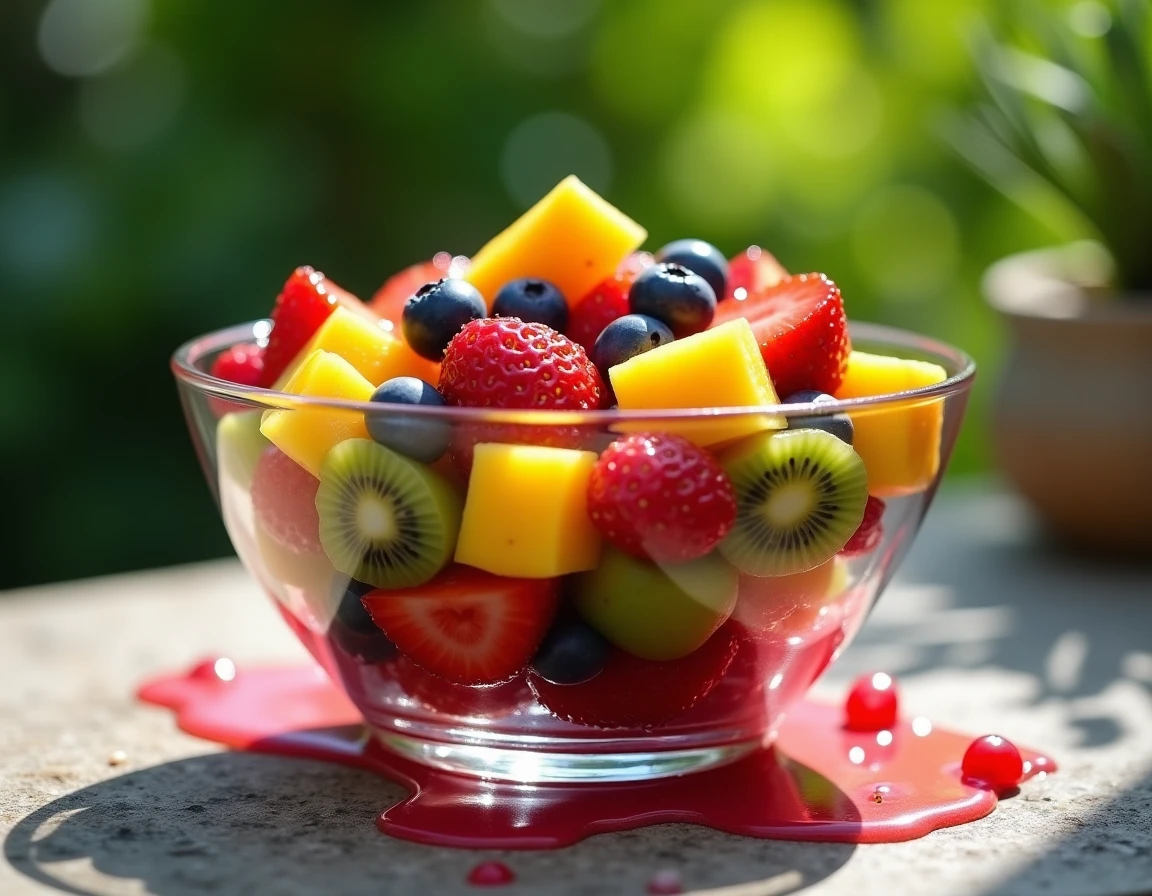
A sweet syrup accelerates the softening of delicate fruits like strawberries and raspberries through osmosis. The sugar attracts the water contained in the flesh, producing an abundant juice at the bottom of the bowl but softer fruits on the surface.
When syrup remains relevant
Syrup makes sense with naturally low-sugar or slightly bitter fruits. A mix of grapefruit, kiwi, and pomegranate gains roundness with a drizzle of lightly flavored vanilla syrup, whereas an extra lemon juice would make it too acidic.
Quantity makes the difference. One to two tablespoons of syrup for four people is sufficient. Beyond that, the dessert shifts towards a sweet cold compote that masks the distinct taste of each fruit. Recent nutritional recommendations align with this: favoring fresh citrus juice over nectar or concentrate-based juice limits the load of free sugars.
Exotic juices and rare citrus: yuzu, kaffir lime, passion fruit
French gastronomy increasingly uses citrus fruits with fine aromatic acidity to season fruit salads. Yuzu, kaffir lime, and calamondin bring a complex fragrance that classic lemon does not replicate.
- The yuzu delivers a floral acidity, less aggressive than yellow lemon, which pairs well with mango and white peach.
- The kaffir lime has a highly fragrant zest with citrus and herbal notes, to be used in small quantities lest it dominate the entire dessert.
- Passion fruit, pressed and filtered, provides a juice that is both acidic and aromatic, ideal for an exotic fruit salad (pineapple, lychee, papaya).
These juices remain expensive and sometimes hard to find outside specialty stores. Their appeal lies in the small amount needed: half a teaspoon of yuzu juice is sufficient for a bowl, which offsets the purchase price.
Anti-waste fruit juices: turning damaged fruits into seasoning
Stained oranges, slightly wilted apples, and overripe pears produce perfectly usable juice for drizzling over a fruit salad. This approach, driven by anti-waste initiatives in large retail, has a dual advantage: it reduces waste and generates a naturally sweet liquid without added syrup.
Quick method using a blender
Blending one or two overripe fruits with the juice of half a lemon creates a thick, fragrant liquid base. A bruised pear blended with a few drops of lemon produces a sweet coulis that coats the pieces without drowning them. Overripe fruits yield a sweeter juice than homemade syrup, which avoids the need to add sugar.
The result varies depending on the base fruit. A damaged apple gives a neutral, versatile juice. An overly soft mango produces a dense tropical coulis that strongly influences the flavor of the salad. Adapting the blended fruit to the recipe’s profile remains the only reliable rule.
Fruit kefir and kombucha: fermented juices in the salad
Some recent nutritional publications mention adding fermented drinks (fruit kefir, kombucha) to homemade fruit salads. The idea: to bring a slight effervescence and lactic ferments to the dessert.
This practice remains marginal in mainstream recipes. The vinegary taste of kombucha can unsettle palates accustomed to a sweet dessert. Fruit kefir, being milder, is better suited for this, especially with red fruits (strawberries, currants, blueberries) whose natural acidity pairs well with fermentation.
- Pour the kefir just before serving to retain the effervescence.
- Reduce or eliminate any other sweet liquid in the bowl.
- Avoid very sweet fruits (banana, grape) that create an unpleasant contrast with the acidity of the fermented drink.
The main axis for choosing a fruit salad juice remains the acidity-sugar ratio relative to the selected fruits. A freshly squeezed citrus juice covers most cases: it protects the fruits from oxidation, provides just enough sugar, and does not mask the flavors. Exotic or fermented options work as occasional variations, not as daily bases.