Cruises offer a unique escape, a journey across the seas that promises relaxation, discovery, and luxury. However, in light of this promise of escape, one question arises: are these journeys on the most beautiful cruise ships accessible to everyone, including people with reduced mobility? With a growing demand for inclusive travel experiences, many cruise companies have invested heavily in adapting their facilities to meet the specific needs of every passenger. As the industry evolves, it is essential to assess whether these efforts are sufficient and whether they guarantee equivalent comfort for all travelers, without compromising on luxury and the overall experience.
Onboard Facilities for People with Reduced Mobility
To begin with, it is essential to look at the infrastructures specifically put in place to facilitate access and comfort for people with reduced mobility aboard cruise ships.
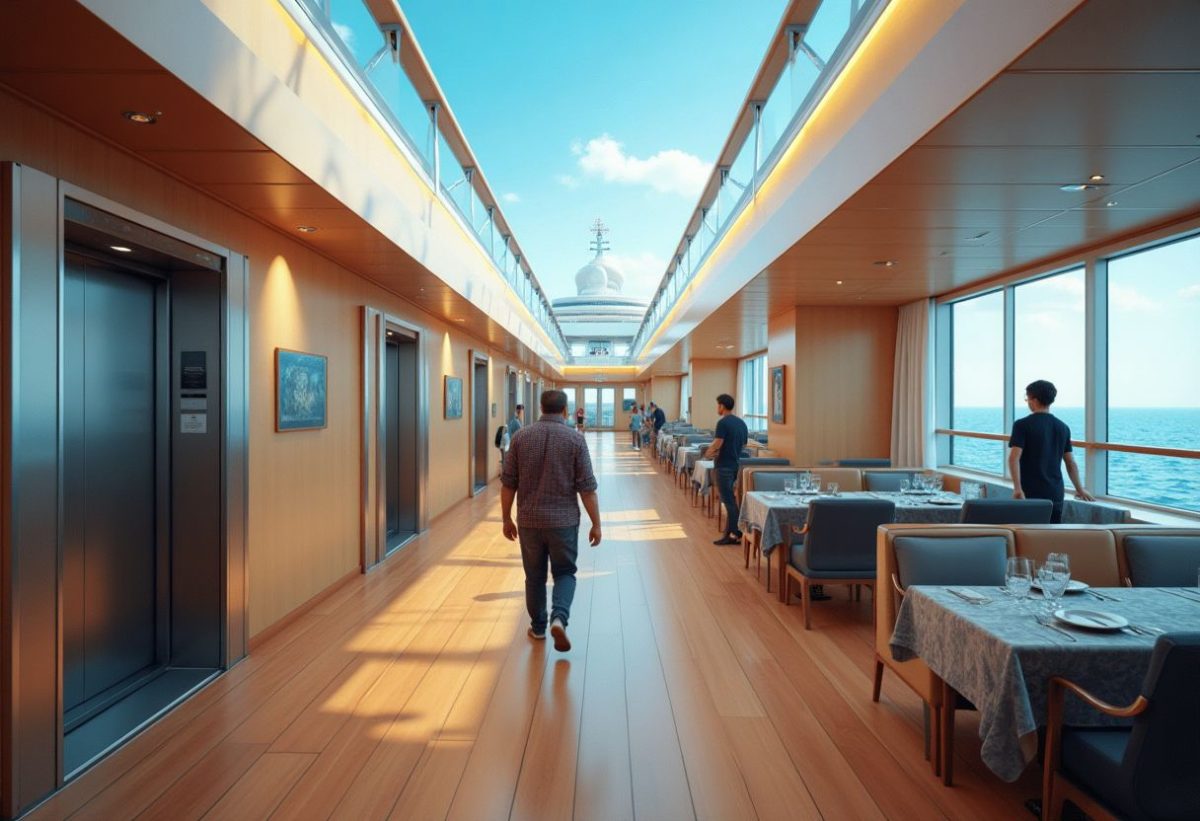
Modern ships often provide specially designed cabins, with wider doors, adapted bathrooms, and ergonomic equipment to facilitate mobility. Spacious elevators are also integrated to allow easy access to different decks. Well-thought-out signage, with clear indications, plays a crucial role in guiding passengers. Ramps and lifting platforms are often available in public areas to ensure that every part of the ship is accessible. Finally, some operators offer personal assistance services, ensuring that passengers’ needs are fully met throughout the journey.
Adapted Dining and Entertainment Experience
A luxury cruise is not just about the beauty of the landscapes but also about the culinary experience and the entertainment offered on board.
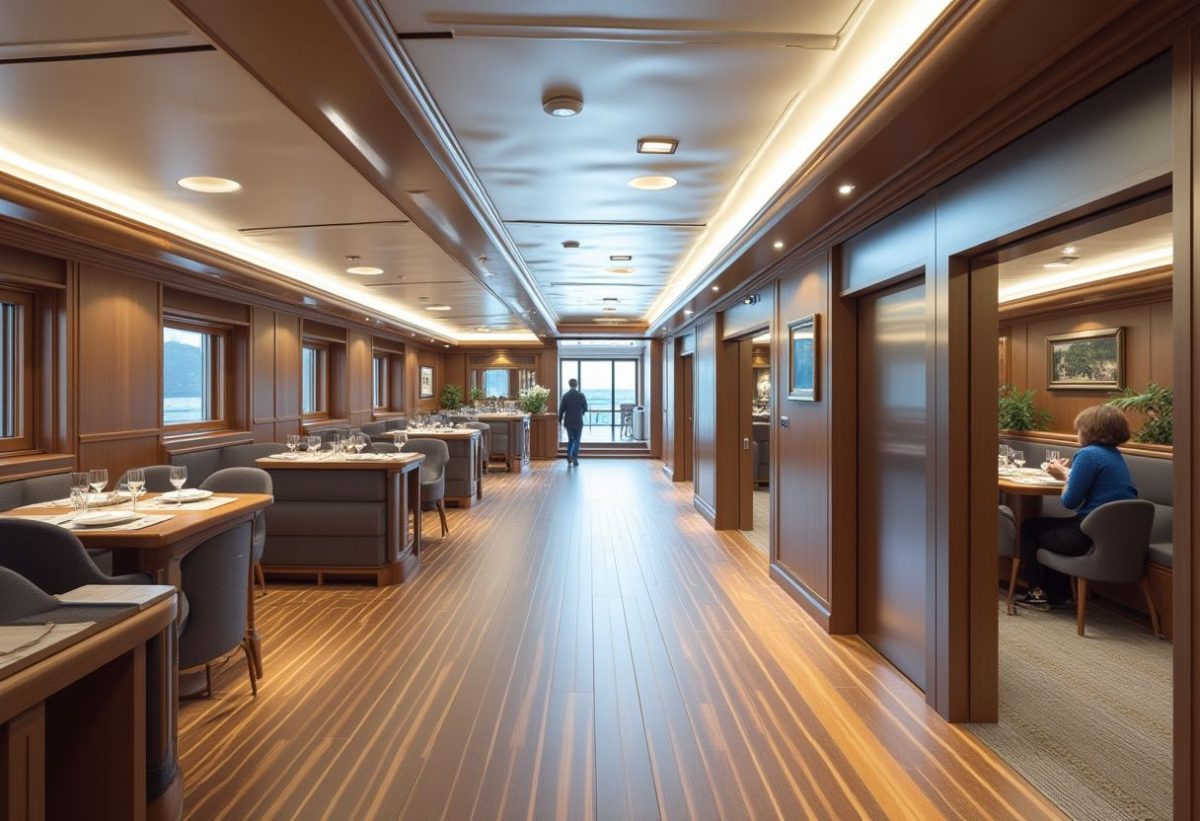
- Restaurants: offering barrier-free access, many restaurants on these ships ensure to provide menus adapted to specific dietary needs, guaranteeing an inclusive culinary experience for all.
- Theaters and Performance Venues: these places are often equipped with reserved seating for people with reduced mobility, ensuring good visibility and optimal comfort during performances.
- Swimming Pools and Relaxation Areas: lifting systems allow easy access to the pools, and relaxation areas often have designated zones for individuals with special needs.
Shore Excursions and Accessibility
Another aspect to consider is the ability of travelers to explore the destinations visited during their cruise.
Cruise companies are increasingly seeking to offer inclusive excursions. This means that when a ship docks, people with reduced mobility can participate in organized excursions that take their needs into account. For example, adapted vehicles are often available for land transportation. Trained tour guides are another component, as they ensure an enriching experience for all participants, without exception. Itineraries are planned to avoid major obstacles, and the chosen attractions are, as much as possible, accessible to everyone. By choosing a Ponant cruise, one ensures special attention to these essential details.
Technologies and Innovations for Accessibility
In an industry where innovation is key, technology plays a significant role in improving accessibility on board.
State-of-the-art cruise ships integrate advanced technologies to support accessibility. For example, mobile applications allow passengers to plan their days, book dining experiences, or explore available activities. Navigation and voice assistance systems help individuals move around independently. Alert and communication devices are also designed to ensure the safety and peace of mind of passengers, especially those with specific needs. Thus, technological innovation, far from being a mere gadget, becomes an indispensable ally for a successful cruise.
Cruises on the most beautiful ships, with their commitment to inclusivity and accessibility, prove to be a viable and attractive option for people with reduced mobility. Although challenges remain, the ongoing efforts of cruise companies to adapt their services and infrastructures demonstrate a genuine willingness to include every passenger in the extraordinary adventure that a cruise represents.