
The Siberian husky in an apartment does not pose a problem of floor space. It poses a problem of daily energy expenditure, tolerance to noise from neighbors, and thermal management in an urban environment. We observe that most failures do not come from the size of the housing, but from an underestimation of the mental and physical load that this breed requires every day, without exception.
Filtering in shelters: how associations evaluate an apartment adopter
Specialized shelters for northern breeds have tightened their placement criteria in recent years. Simply having a garden is no longer enough to validate an application. Conversely, living in an apartment is not an automatic reason for rejection.
What matters now is the overall lifestyle of the candidate. Associations require documentation of a specific physical activity program: frequency of outings, type of exercise (canicross, cani-MTB, long hikes), presence of a second adult in the household. The criterion of “garden or not” has been replaced by a behavioral assessment of the household.
Several shelters explicitly mention in their ads that the adopter must have already lived with a northern dog or have trained with a specialized educator. This “northern experience” filter reduces the risk of return to the shelter, which remains high for huskies placed with first-time adopters without preparation. Young males between one and three years old are the most represented in returns, often described as destructive or noisy due to insufficient activity.
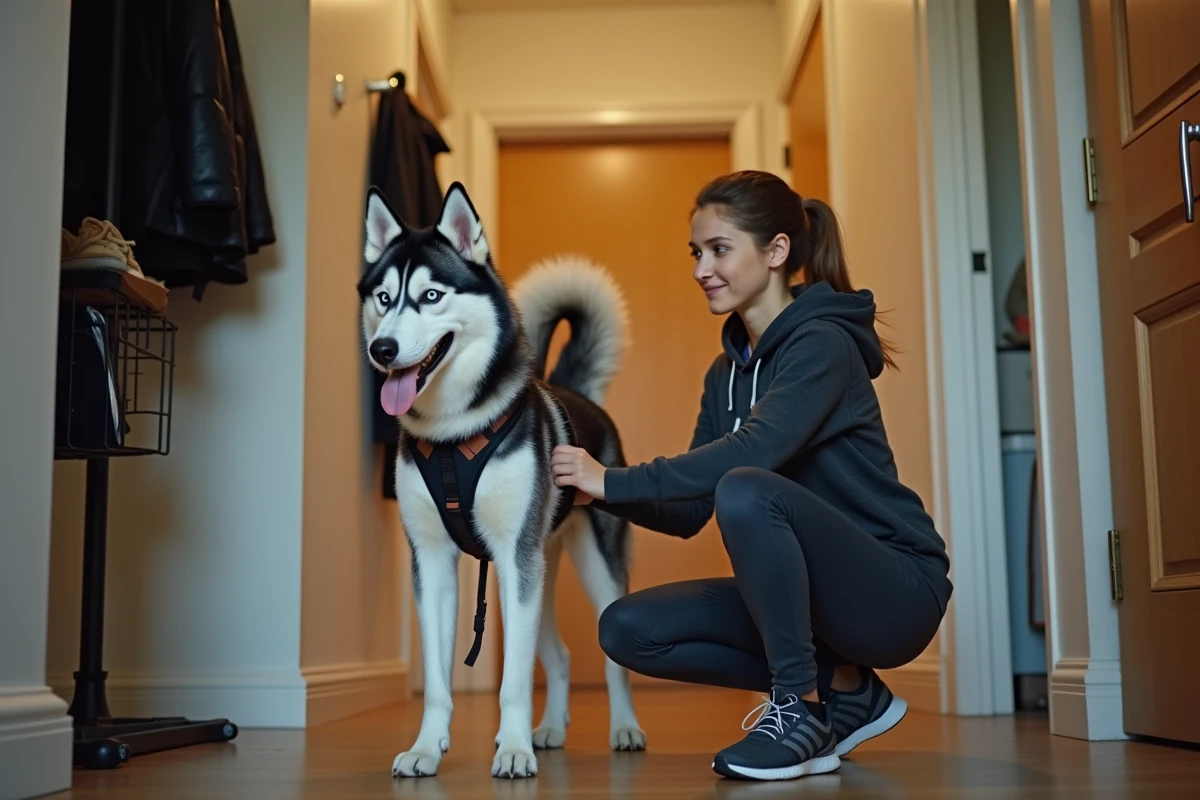
When looking into the life of a husky in an apartment, these field practices show that the breed is not incompatible with urban housing, but that prior support makes all the difference.
Physical expenditure of the husky in an urban environment: real thresholds and common mistakes
A Siberian husky does not need to run in the snow. It needs to pull, trot for long periods, and solve problems. The confusion between “large space” and “appropriate expenditure” remains the primary cause of disillusionment.
Activities that work in the city
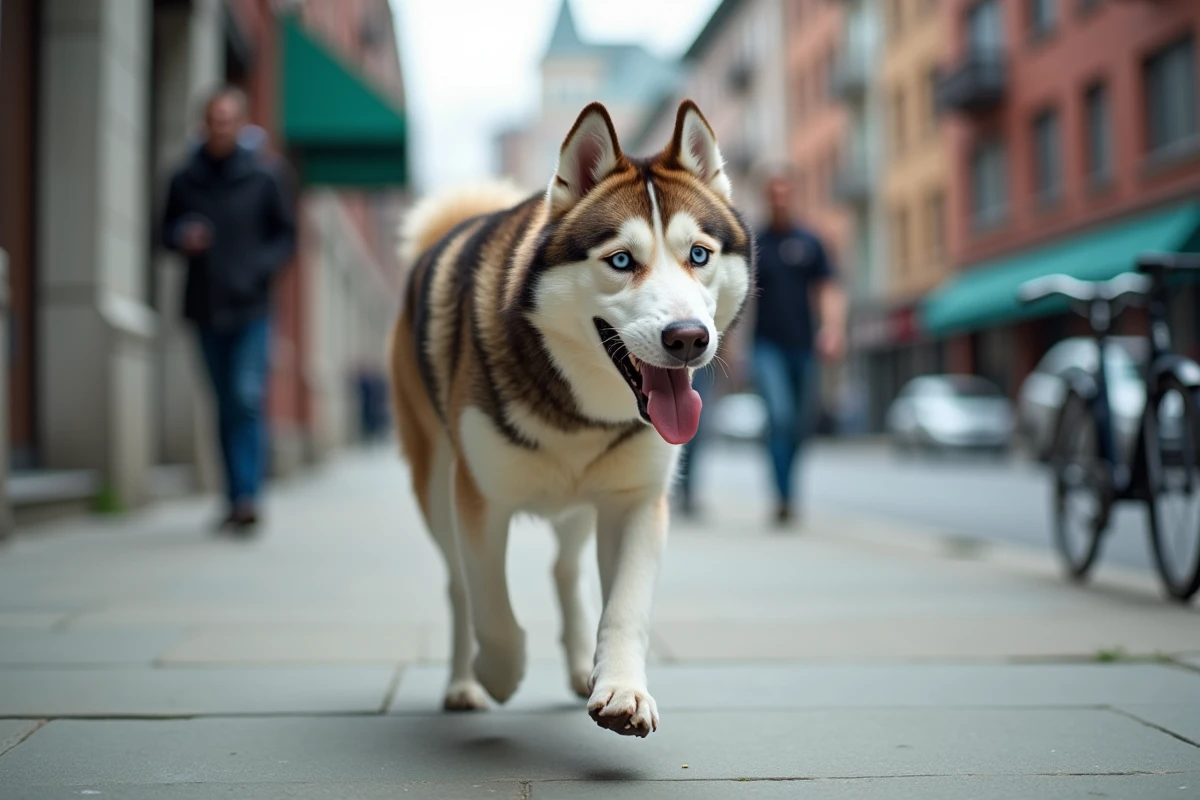
Canicross and cani-MTB allow for the traction expenditure that the husky instinctively seeks. A daily running outing of ten to fifteen kilometers, combined with scent work sessions, covers most of the needs of a healthy adult.
- Dog scootering (or cani-scooter) replicates the sensation of pulling on paved surfaces, provided that the pads are protected in hot weather
- Scent work courses in urban parks engage concentration and tire the dog without excessive joint impact
- Frisbee or long throws in open areas complement the expenditure but never replace the endurance effort that the breed demands
Two short neighborhood walks are never enough for a husky. We recommend a minimum of two hours of sustained activity per day, divided into two or three sessions. An under-stimulated northern dog will destroy, vocalize, and develop stereotypies within weeks.
Mental stimulation as a supplement
Digging toys, licking mats, and food puzzles occupy the times of absence. They do not replace physical expenditure but reduce anxiety related to isolation. The husky being a pack dog, prolonged solitude remains the main stress factor in an apartment, more so than the lack of square meters.
Thermal management of the husky in an urban apartment
General articles repeat that the husky tolerates the cold. They overlook the opposite problem: summer overheating in urban areas, amplified by heat islands.
The double coat of the Siberian husky, designed to insulate against both cold and moderate heat, reaches its limits when indoor temperatures persistently exceed comfort thresholds. An apartment under the roof, poorly ventilated, without air conditioning, can become dangerous as soon as the first heat waves hit.
- Maintain an indoor temperature below the dog’s thermal stress threshold through mechanical ventilation or air conditioning
- Shift outings to cooler hours (before seven a.m., after nine p.m.) to protect the pads from burning pavement
- Provide permanent access to fresh water and a cooling mat, especially during shedding when the dense undercoat traps heat
Urban summer heat poses a concrete health risk that most breed sheets do not address. Several husky owners in the city report having to regularly correct the myth that their dog “should live in the snow,” while the real danger comes from excess heat, not lack of cold.
Noise disturbances and neighbors: the breaking point in co-ownership
The husky does not bark. It howls. This distinction changes everything in an apartment context. The vocalizations of the husky pass through walls much more effectively than a classic bark, and their frequency increases in cases of boredom or solitude.
In co-ownership, complaints about noise disturbances related to howling are a frequent reason for abandonment or forced relocation. Training for calmness must begin at the puppy stage, associating solitude with a positive experience (occupational toy, neutral departure routine). An adult husky that has never learned to be alone will be extremely difficult to desensitize.
We recommend informing the property manager and direct neighbors before the dog’s arrival, and setting up camera monitoring in the first weeks to objectively assess the duration and intensity of vocalizations in your absence.
The husky can live in an apartment. But this life requires a rigorous daily organization, a significant time budget, and prior knowledge of northern specifics. Shelters that filter based on breed experience have understood that housing is just one variable among others, and rarely the most determining one.