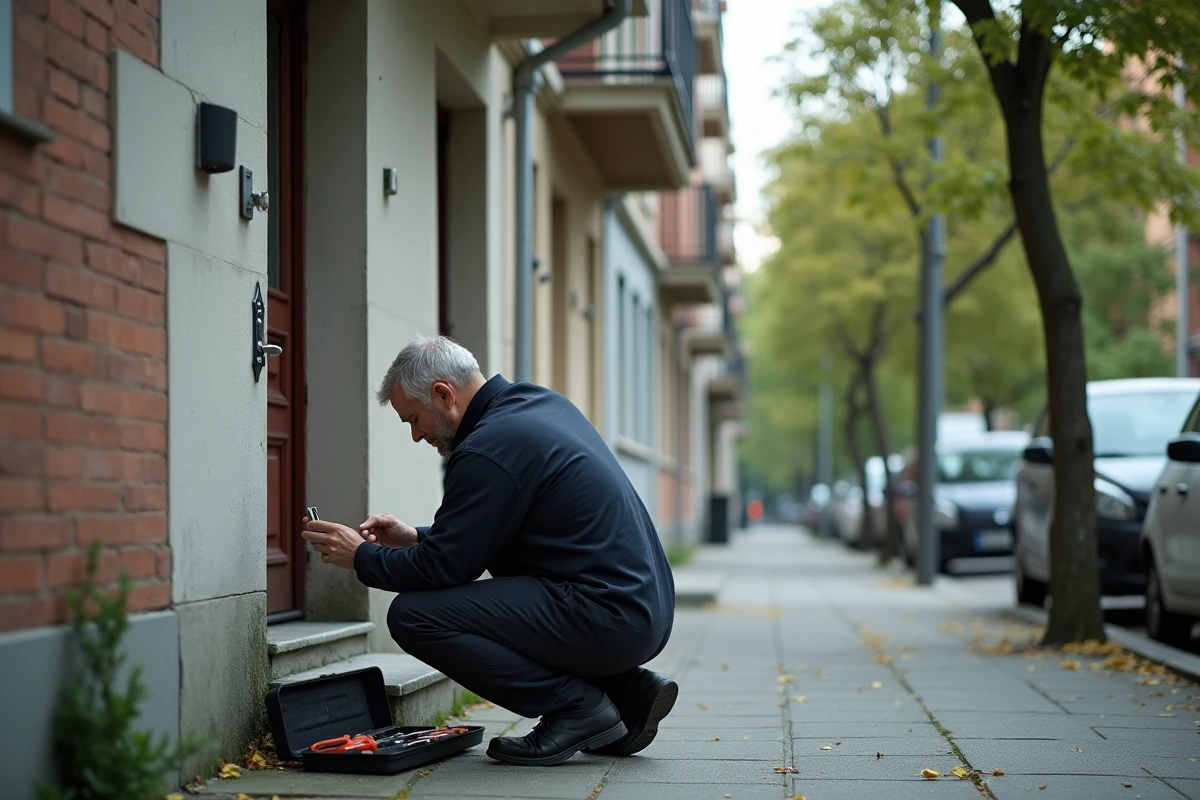
An apartment on the fifth floor seems safe from intrusions. However, the floor number alone says little about the actual risk of burglary. Recent data shows that the physical accessibility of the housing matters more than its height. Ground floor, first floor, top floor with terrace: each configuration has its own vulnerabilities, often underestimated.
Actual accessibility of housing: the criterion that burglars assess before the floor
You live on the third floor and think you are safe? A balcony connecting to the neighboring building, a temporary scaffold, or a sturdy gutter can turn a supposedly safe floor into an easy target. Burglars think in terms of access, not in terms of floor number.
The Ministry of the Interior’s statistical service (SSMSI) highlighted, in its data published at the end of 2024, that the share of break-ins committed by climbing facades or balconies has been increasing for several years. This method of operation increases the exposure of first and second floors equipped with connecting or protruding balconies, even when they do not directly overlook the street.
Claims analyses conducted by insurers like Generali and Axa confirm this shift. The floor is no longer an isolated pricing criterion in home insurance contracts. Premiums or discounts now depend on combined variables, such as a ground floor overlooking an unsecured public space, or a high floor with accessible rooftop terrace. There are also statistics on apartment burglaries and floors that detail these distinctions between levels.
The real risk factor is the combination of the height of the housing and its immediate environment: the presence of a business below, proximity to a flat roof, access through a poorly monitored inner courtyard.
Ground floor and first floor: why these levels concentrate intrusions
Unsurprisingly, the ground floor remains the most exposed level. Direct access from the street, a poorly fenced private garden, or an ajar window is enough. The majority of apartment burglaries target this level simply because the burglar does not need any climbing tools.
The first floor comes in just behind. Regional summaries from the National Gendarmerie in Île-de-France have reported since 2022 a rise in burglaries on the first floor overlooking a business. Bakery, restaurant, pharmacy: the flat roofs or awnings of these establishments provide a natural stepping stone to the windows above. This very concrete case is rarely mentioned in standard security guides.
Typical configuration of a vulnerable apartment on the first floor
- The housing overlooks a commercial space whose flat roof or awning offers a stable support for climbing
- A continuous balcony connects several apartments without physical separation, allowing passage from one unit to another
- The facade has architectural elements (cornices, sturdy gutters, decorative grilles) that facilitate climbing
From the second floor onwards, the risk decreases significantly, provided there is no lateral access that compensates for the height. A second floor with a connecting balcony remains more exposed than a fourth floor without a balcony.
High floors and top floor: a false sense of security linked to accessible roofs
Living at height is reassuring. But a top floor with a rooftop terrace can be as vulnerable as a ground floor. Experienced burglars sometimes access roofs through common areas (unsecured stairwell, smoke vent hatch, technical room).
This phenomenon mainly concerns older buildings whose roof access has never been secured. In newer residences, locked fire doors and access control systems limit this risk. The difference between two buildings in the same neighborhood can be considerable.
Why insurers no longer reason by floor
The pricing grids of home insurance contracts have evolved. Rather than applying an automatic discount above the third floor, insurers cross-reference several parameters:
- The presence or absence of a terrace, balcony, or loggia accessible from the outside
- The type of lock and front door (reinforced, A2P certified, or standard)
- The existence of an alarm system or video surveillance declared in the contract
- The geographical location and burglary rate of the municipality
This approach based on actual accessibility rather than floor number reflects what claims data shows: an apartment on the sixth floor with a rooftop terrace and a non-reinforced front door presents a risk comparable to a well-protected ground floor.
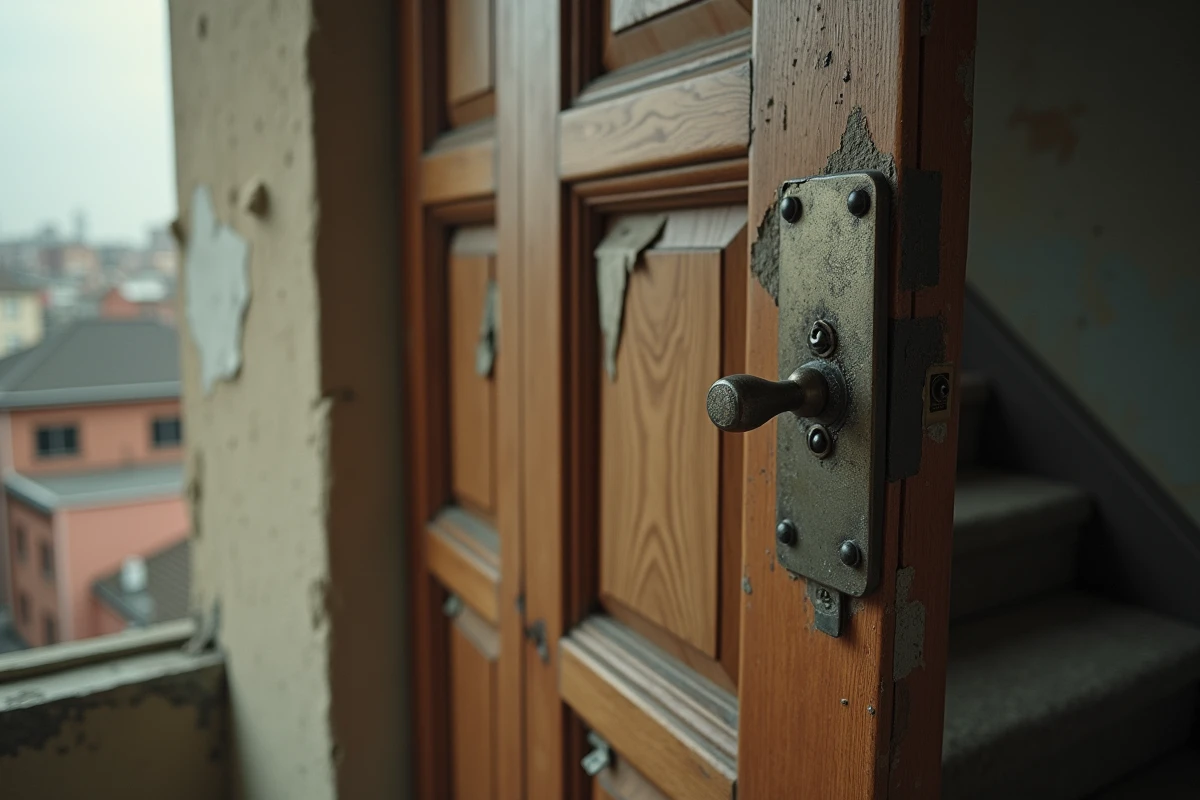
Apartment security: adapting protection to its actual configuration
Knowing the most affected floor is only useful if it leads to concrete choices. Protecting a first-floor apartment above a business does not require the same measures as securing a top floor with rooftop access.
On the ground floor and first floor, reinforcing openings remains the priority: rolling shutters with internal locks, burglary-resistant glazing, discreet bars on the most exposed windows. Burglars seek speed. Anything that prolongs the intrusion time beyond a few minutes deters them.
For intermediate floors, vigilance focuses on balconies. A physical separation between adjoining balconies (solid wall, high grille) seriously complicates lateral passage. This is a modest investment that changes the game.
On high floors, securing rooftop access often falls to the condominium. Checking that the roof hatch is locked, that the stairwell has a functional keypad, and that common areas are not left open all the time constitutes a realistic first level of protection.
The floor number is just one indicator among others. What truly protects an apartment is the combination of the quality of access, the immediate architectural environment, and the security measures in place. A well-equipped ground floor resists better than a neglected third floor.