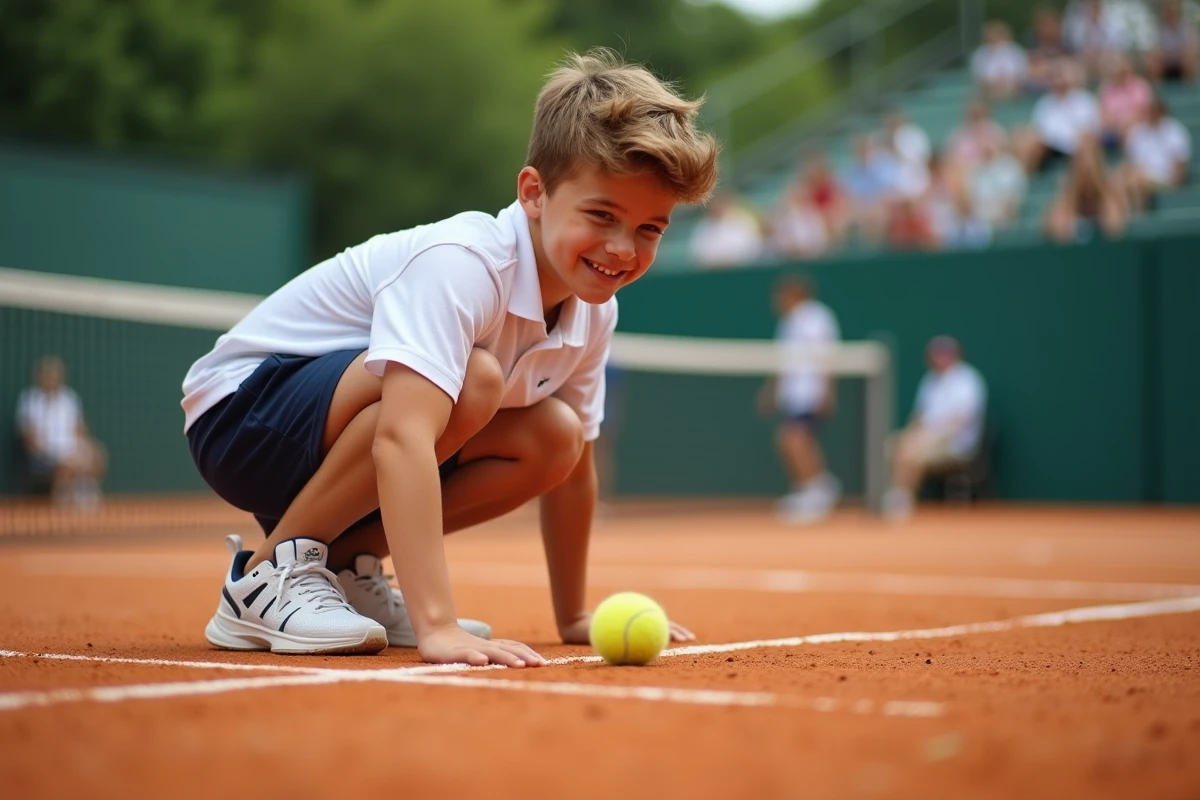
Tennis ball collectors are part of the scenery at major tournaments. Present on every court, they ensure the fluidity of the game by retrieving balls between points. Their role is visible, codified, and physically demanding. The question of their remuneration comes up every year during Roland-Garros, and the answer often surprises the general public.
Legal status of ball collectors in France
At Roland-Garros, ball collectors (also called “ballos”) are minors aged 12 to 16. Their activity falls within a federal volunteer framework, not under an employment contract. Ball collectors at Roland-Garros are not paid.
This situation is explained by the child labor regulations in performances. This legal framework requires an individual authorization issued by the departmental commission, with very strict maximum working hours for those under 16. Establishing a proper employment contract for around 300 minors mobilized for a two-week tournament would be legally and administratively very burdensome.
Several news articles regularly discuss the salary of a tennis ball collector in an attempt to untangle misconceptions. The term “salary” is indeed misleading: since there is neither a contract nor a payslip, one cannot speak of salary in the strict sense.
Ballos, however, receive complete sports equipment (uniform, shoes), meals on-site throughout the tournament, and accreditation that gives them access to the courts. These material benefits do not constitute remuneration in the sense of labor law.

Selection and training of ballos at Roland-Garros
The French Tennis Federation has structured a multi-year selection process that resembles more a federal sports pathway than a classic recruitment. The process begins at the regional level, well before the tournament itself.
- Regional selections identify candidates among young licensed players aged 12 to 16, based on criteria of agility, concentration, and knowledge of tennis rules.
- The pre-selected candidates participate in an intensive training camp of about four days during school holidays, where they learn the codified movements, the technique of rolling the ball, and team coordination.
- Only a fraction of the trainees is ultimately selected to officiate on the courts of Roland-Garros during the fortnight.
This federal pathway explains why the status of ball collector is closer to a volunteer activity supervised by the federation than to a seasonal job. The young participants do it primarily for the sporting experience and proximity to professional players.
Remuneration of ball collectors in tournaments abroad
The French situation is not universal. In the international professional circuit, practices vary according to tournaments and countries.
At the US Open, for example, ball collectors can be adults, and some American tournaments pay an hourly compensation. The economic model depends on local labor law and the policy of each organizer. The major Grand Slam tournaments do not all apply the same rules.
On the other hand, the Roland-Garros model (volunteer minors trained by the federation) remains common in European tennis. Wimbledon operates on a similar principle, with selected and supervised young people without employment contracts.
This diversity of statuses makes any global comparison difficult. Field feedback varies on this point: depending on the tournaments, a ball collector can be a 13-year-old volunteer or a paid 20-year-old student.
The debate on reclassification as concealed work
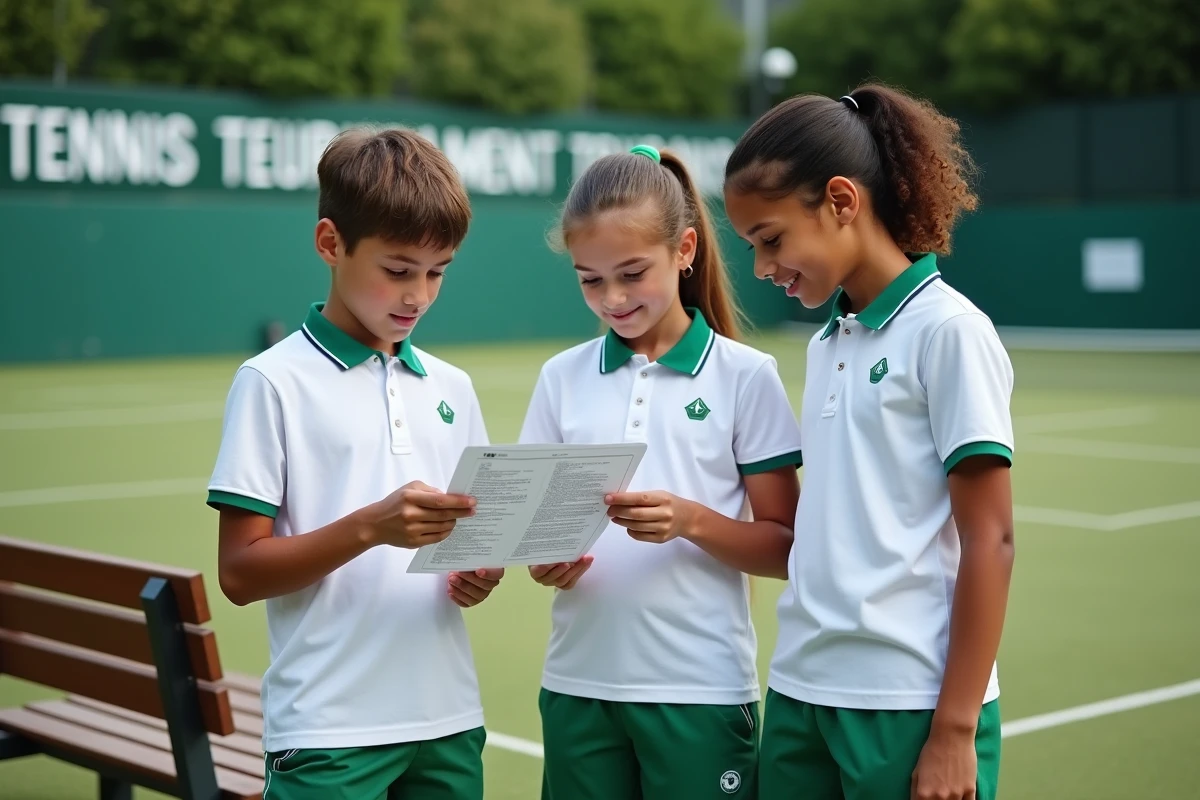
In recent years, voices have been raised in the legal and union worlds to question the total absence of remuneration for ballos. The argument focuses on the gap between the colossal amounts paid to players in prize money and the imposed volunteer work on collectors.
Some legal experts raise the question of reclassification as concealed work if the tasks performed were to be considered a professional service. Collectors follow precise instructions, adhere to imposed schedules, and operate under a hierarchy on the court. These elements resemble, on paper, the criteria of subordination inherent in an employment contract.
The available data do not allow for a conclusion that this reclassification will ever occur. No disputes of this type have been brought before French courts at this stage. The federation’s argument remains that the activity falls within the associative and sporting framework, not an employer-employee relationship.
The question is also political. Professional sports in France relies on a network of volunteers (regional referees, escorts, collectors) whose unpaid status is rarely contested as long as the activity is perceived as educational. The debate emerges when the revenues from the spectacle reach levels that make volunteerism difficult to justify.
Ball collector in daily life: what the role really demands
On the court, a ball collector does not simply chase after a lost ball. The role requires real physical preparation, the ability to concentrate on matches that sometimes last several hours, and resilience to weather conditions (heat, rain).
- Movements are choreographed: each position on the court corresponds to a specific role (net, baseline), with regular rotations.
- The collector must anticipate the trajectory of the ball and the direction of the serve, without interfering with the player or entering their line of sight at the wrong moment.
- The pressure is heightened by the presence of cameras and the public: any mistake is visible live on television.
For the selected young people, this experience often represents a significant memory of their sporting journey. However, it does not lead to any direct professional career. Being a ball collector remains a temporary, unpaid activity without contractual follow-up.
Thus, the issue of the salary of tennis ball collectors in France boils down to a stable paradox: a visible, demanding, and supervised role, performed for free by minors in an economic context where the financial flows of professional tennis are counted in millions of euros. As long as the current legal framework holds, this situation is unlikely to change.