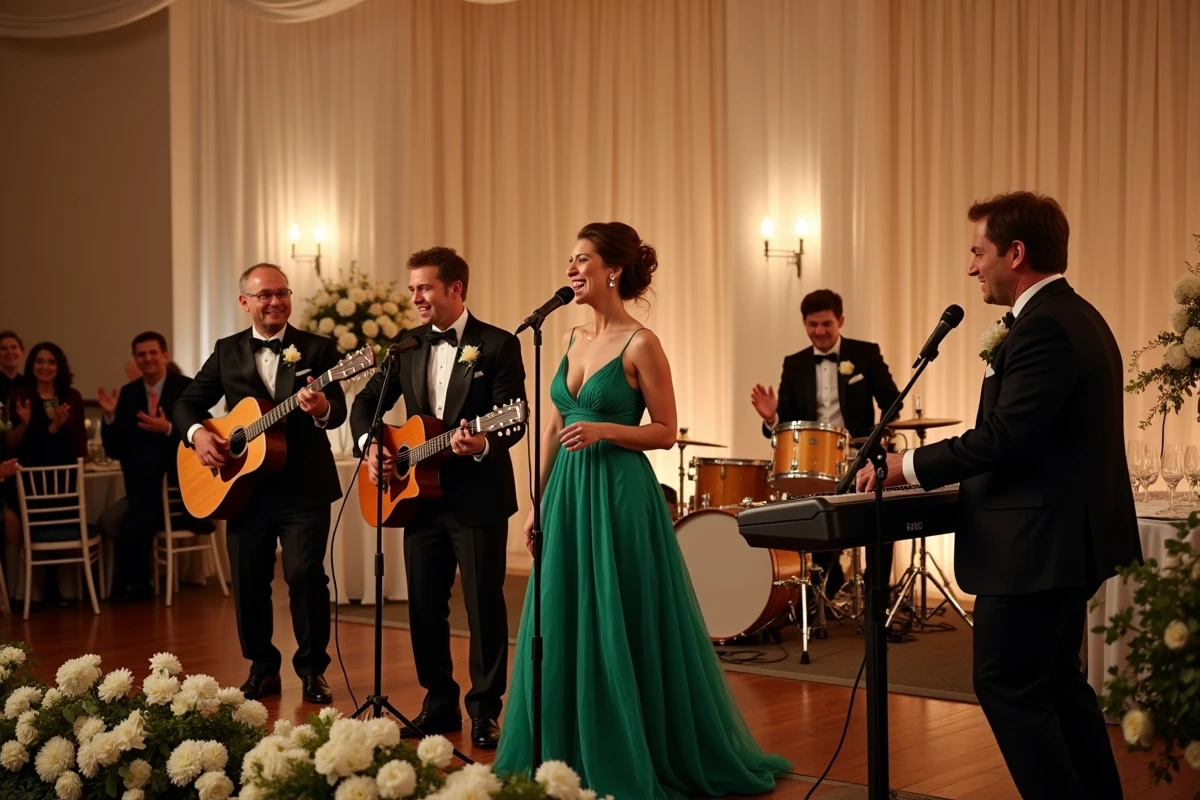
The game of the 12 months is based on a simple principle: each month of the upcoming year, the newlyweds receive a gift or a challenge brought by a designated guest. During the evening, a host plays music, participants walk around chairs (like musical chairs), and when the music stops, the one left standing inherits the next month. The choice of songs directly influences the rhythm of the game, the energy of the room, and the enjoyment of the guests.
Choosing the music to animate the game of the 12 months requires thinking about two things: the phase when participants are moving and the phase when challenges are assigned. Two very different atmospheres call for two types of songs.
Active phase music and transition music: two distinct roles
When guests are walking around the chairs, a song that makes them want to move is needed. When the music stops and the host announces the challenge, it is essential to capture attention without drowning out their voice. Mixing these two functions into a single uniform playlist is the most common mistake.
The active phase requires songs with an upbeat tempo and an identifiable chorus. Guests of all ages should be able to follow the rhythm without feeling like they are sprinting. Think of danceable tracks that are not frantic.
For the transition phase (announcement of the month, reading of the challenge, reaction of the newlyweds), lower the volume or switch to a calmer track. The host takes over, and the room should be able to laugh, applaud, and comment. A subtle background music is sufficient.
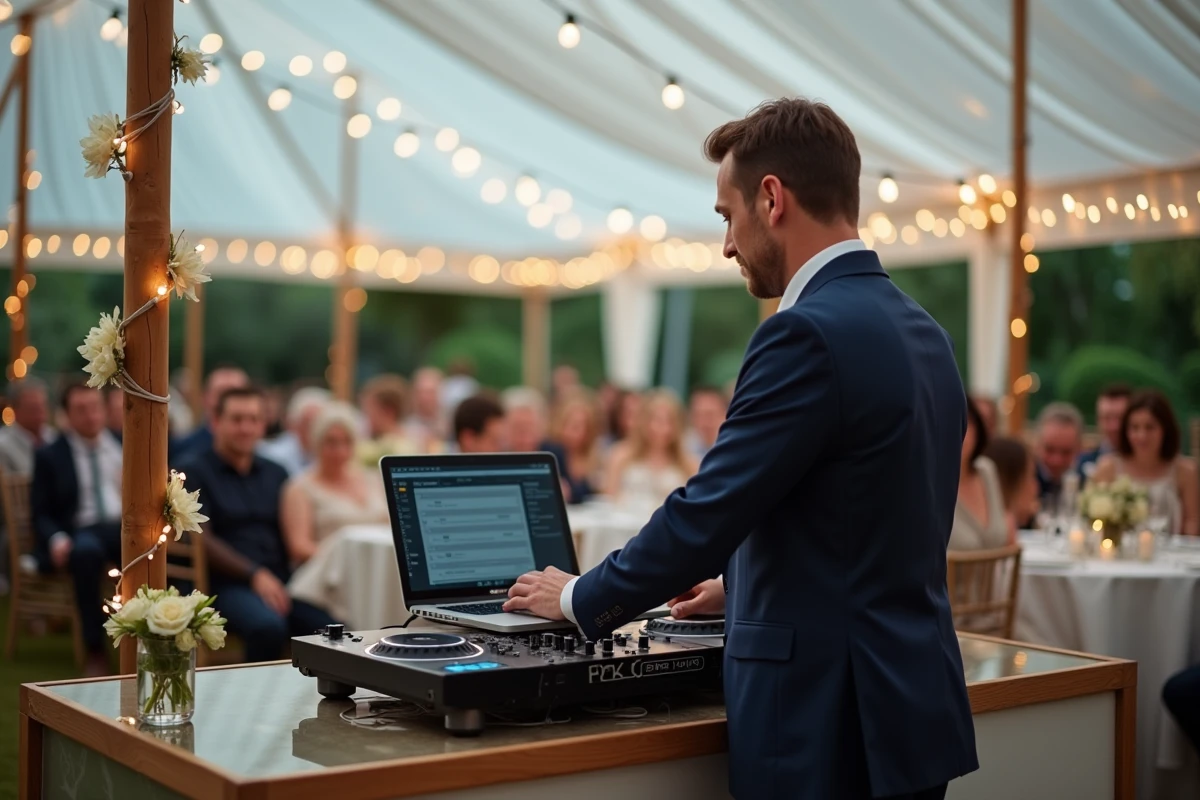
Concrete examples of songs for each phase
- Active phase: universal classics like “I Gotta Feeling” (Black Eyed Peas), “Dynamite” (BTS), “Crazy in Love” (Beyoncé), or French hits like “Dernière danse” (Indila) work because everyone recognizes the chorus in a few seconds.
- Transition phase: a soft instrumental piece or a muted love song (“La Vie en rose”, “Can’t Help Falling in Love”) allows the host to keep the microphone without shouting.
- Restart between two rounds: a short jingle or a few seconds excerpt (siren, bell, well-known sample) signals that the next round is starting and refocuses the room’s attention.
Adapting the wedding playlist to the generations present in the room
You may have noticed that some songs make everyone get up, while others only resonate with a specific age group? In the game of the 12 months, participants often range from 20 to 70 years old. Alternating musical decades keeps everyone engaged.
An effective approach: for the 12 rounds, divide the songs into three blocks. One block of hits from the 1980s-1990s (parents, uncles, and aunts get up). One block of hits from the 2000s-2010s. One block of recent tracks that the younger guests know by heart.
Some benchmarks by decade
For the 1980s, “Les Démons de minuit” (Images) or “Freed from Desire” (Gala) can get a room standing effortlessly. For the 2000s, “Hips Don’t Lie” (Shakira) or “Tous les mêmes” (Stromae) are safe bets. For recent tracks, rely on the songs your guests are already humming daily.
Vary the languages and genres to avoid monotony. A sequence of five French hits in a row will eventually flatten the energy. Slip in a Latin track, an English classic, then return to French.
Preparing the playlist for the game of the 12 months with the host and the DJ
The game of the 12 months usually lasts only about twenty minutes, but it requires precise coordination between the host who cuts the sound and the DJ who manages the tracks. Prepare a list of 15 to 18 songs for 12 rounds, so you have replacements if a track doesn’t resonate.
Send the playlist to your DJ or the person in charge of sound equipment at least two weeks before the event. Specify the desired order, the moments for cuts (end of chorus, drop, natural silence in the track), and the transition volume.
The trap of volume and sound distribution in the room
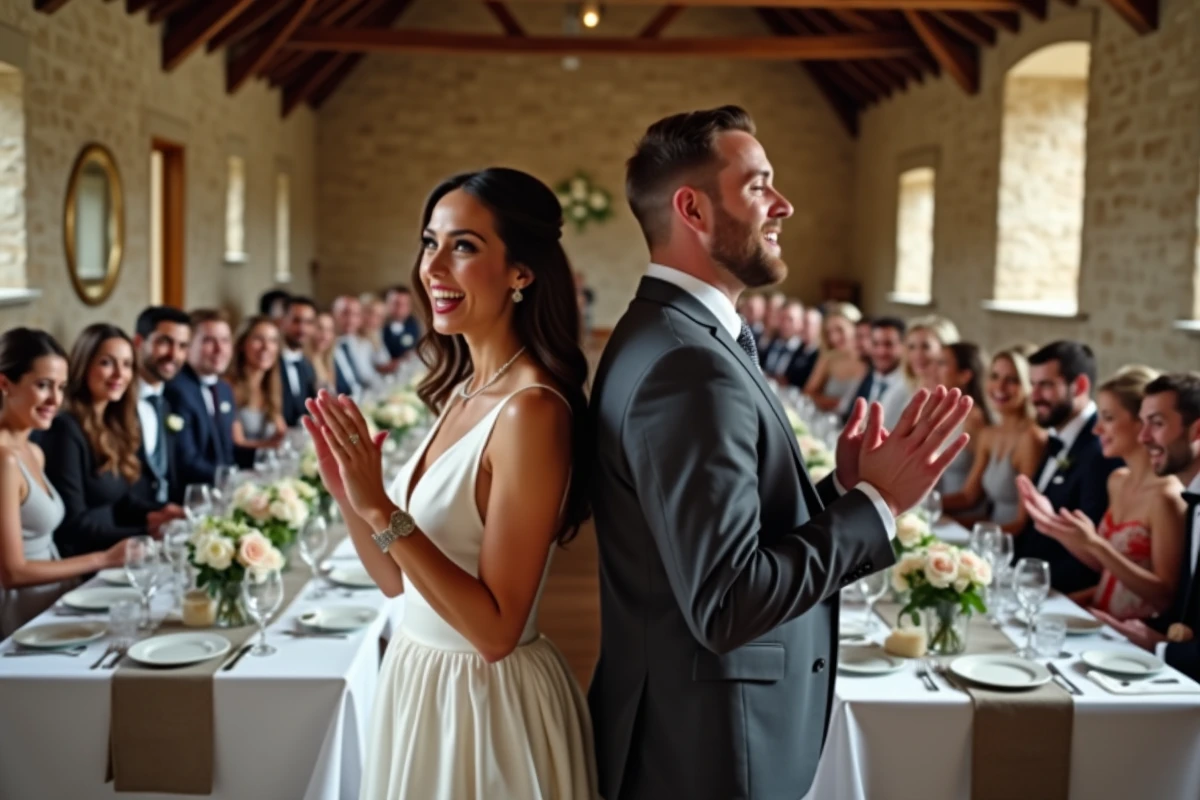
In a large reception hall, sound bounces off the walls. A track that is too loud prevents guests from hearing the host’s instructions. Adjust the volume so that the voice on the microphone remains audible over the music. Do a quick test before the game starts: the host speaks into the microphone while the DJ plays an excerpt at the intended volume.
If you are using a portable Bluetooth speaker instead of professional sound equipment, place it in the center of the circle of chairs. The sound will be better distributed, and the host won’t need to shout.
Original song ideas to surprise the newlyweds and guests
Classics work, but slipping in two or three unexpected choices makes the game memorable. A movie track that the newlyweds love, a song linked to their story (first concert together, music from their trip), or an offbeat title that makes the whole room laugh.
- “Stayin’ Alive” (Bee Gees) for a round where elimination is on a knife-edge, with a nod to the title.
- “Eye of the Tiger” (Survivor) when only three or four participants remain, to build tension.
- An excerpt from a well-known cartoon theme (Dragon Ball Z, Les Chevaliers du Zodiaque) if the atmosphere allows: guaranteed effect on those in their thirties and forties.
- A personalized song for the newlyweds, if a witness has prepared a special verse for the occasion.
The final round deserves a special track, more intense or symbolic, because it designates the last guest and concludes the game. Choose a unifying title that the whole room can sing together.
The musical success of the game of the 12 months relies less on the number of tracks than on their placement. A good song at the right moment is worth more than a playlist of forty songs played randomly. Prepare, test the sound, brief the host, and let the music do the rest.